The 8–10 Month Sleep Regression:
What It Is and How to Help it is and how to help
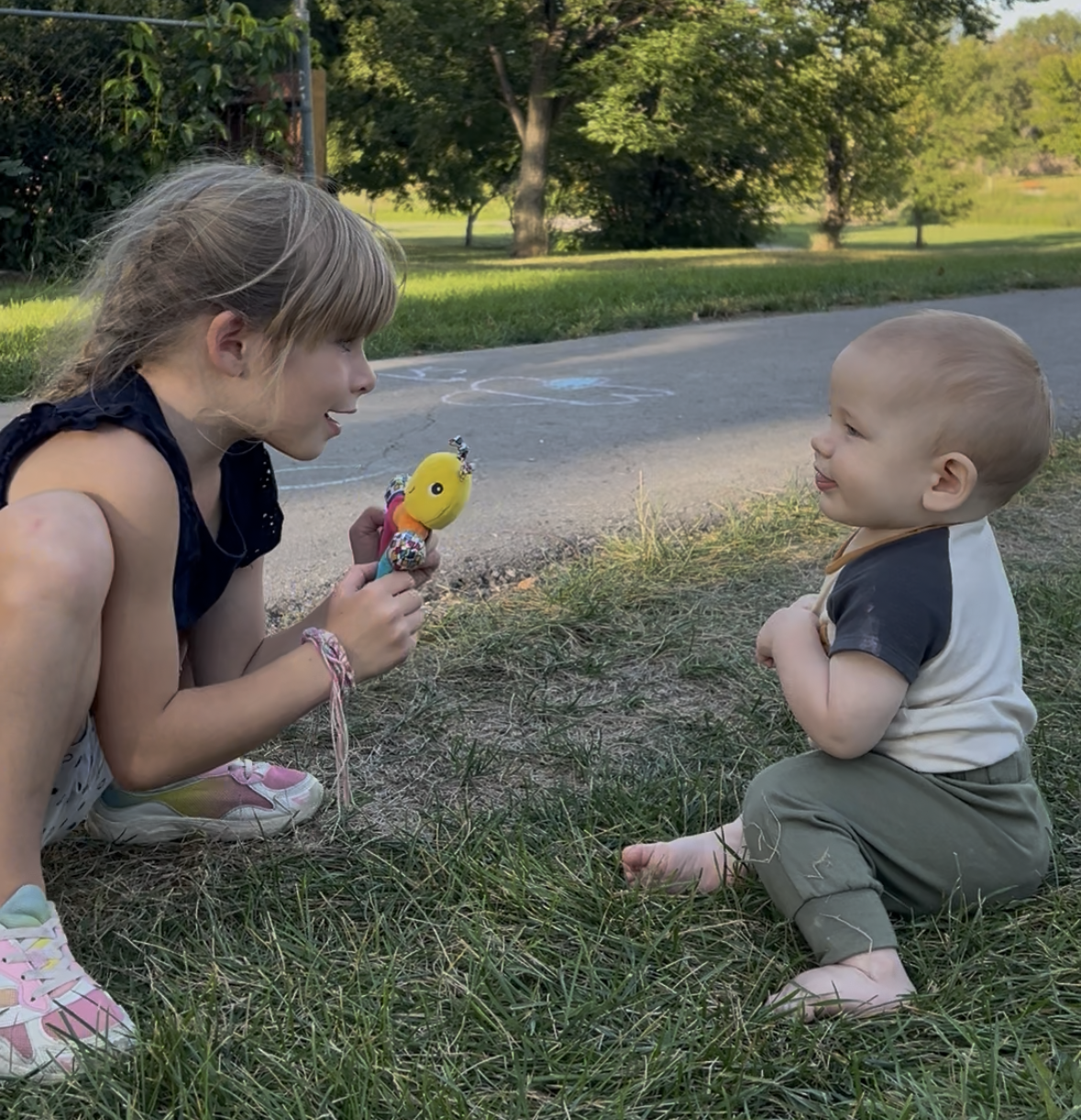
If sleep suddenly feels different, there may be a very good reason.
If your baby was sleeping well and suddenly they are waking at night, fighting naps, crying when you leave the room, you may be in the middle of what is commonly called the 8–9 month sleep regression.
And while it can feel like everything you worked so hard on has disappeared overnight, it usually hasn’t.
This age comes with a huge amount of development. Babies are learning to crawl, pull to stand, babble, move their bodies in completely new ways, and understand more about the world around them. At the same time, many are developing the ability to understand that you exist even if you’re not physically in the room with them. That can bring on separation anxiety, which often shows up very clearly at sleep times.
So if sleep suddenly feels different, there may be a very good reason.
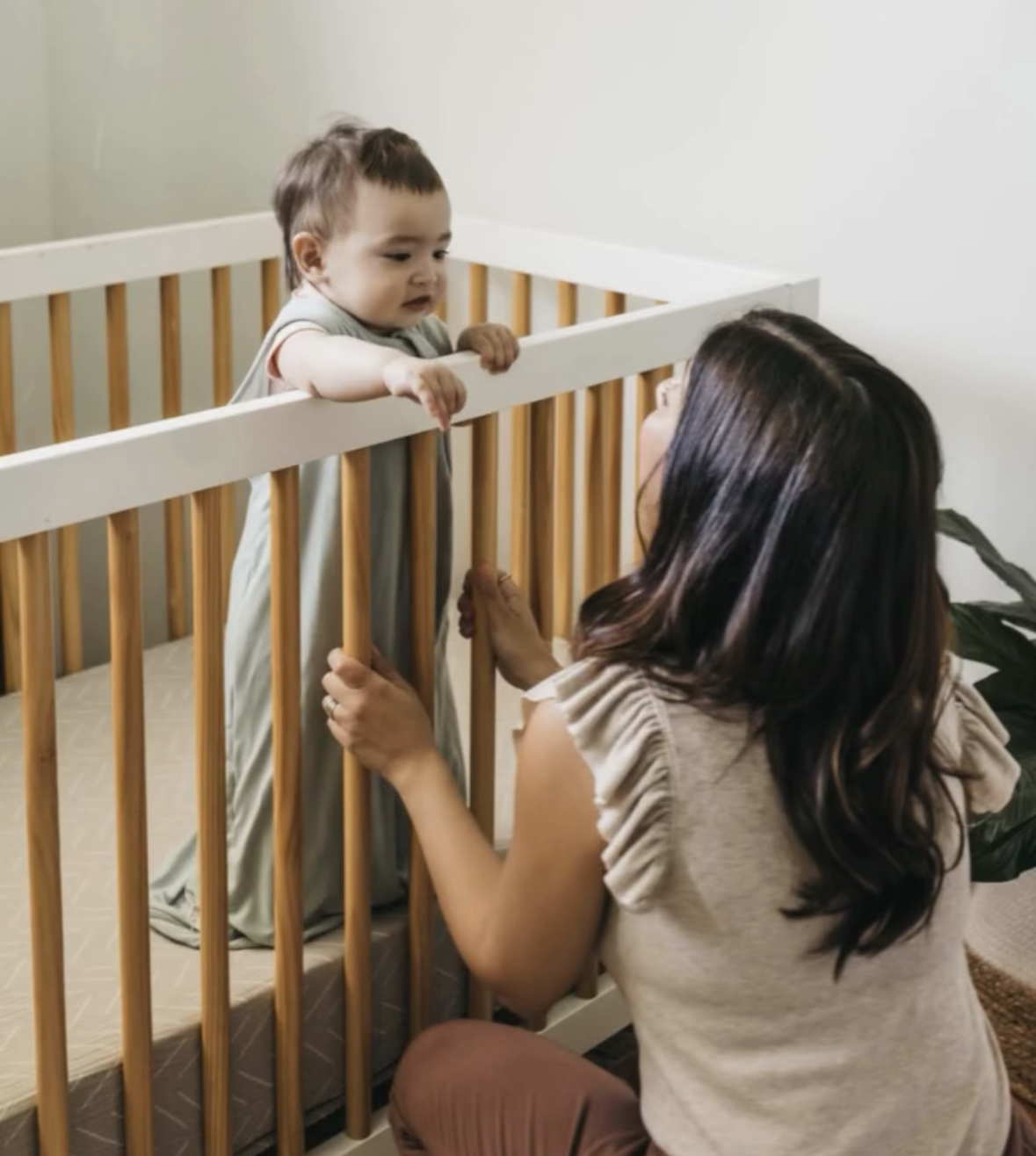
Babies develop at different rates, and some move through this stage with very little sleep disruption at all.
What Is the 8–10 Month Sleep Regression?
The term “sleep regression” is really just a way of describing a period when sleep suddenly becomes more difficult.
It tells us what is happening—but not necessarily why.
You might notice:
More night wakings
Difficulty falling asleep at bedtime
Shorter naps or nap refusal
Early morning waking
Increased crying when you leave the room
Practising new physical skills in the crib
It also doesn’t happen on an exact date.
Babies develop at different rates, and some move through this stage with very little sleep disruption at all.
Your baby doesn’t turn nine months old and suddenly forget how to sleep.
So what is going on?
Usually, there are a few possibilities we want to consider.
1. They’re Learning New Physical Skills
Crawling, sitting and pulling to stand are huge developmental accomplishments—and babies LOVE to practise them.
Unfortunately, they don’t always choose the most convenient time.
You may lay your baby down for a nap only to watch them immediately sit up. Or they may pull themselves to standing in the crib…and suddenly realize they have absolutely no idea how to get back down.
Give your baby lots of floor time during the day to practise these new skills.
If they’re pulling to stand, help them practise getting back down. If they’re rocking on their hands and knees and getting close to crawling, give them plenty of opportunities to work on it while they’re awake.
The goal isn’t to exhaust them.
It’s simply to give their brain and body lots of opportunities to practise the skills they’re so excited about.
2. Separation Anxiety May Be Showing Up
Around this age, many babies become much more aware when their caregiver leaves.
A baby who happily went into the crib last week may suddenly protest the moment you start walking toward the door.
That doesn’t mean you’ve done anything wrong.
Keep your bedtime routine predictable and offer calm reassurance without assuming you need to completely change everything that was working before.
It’s okay if your baby needs a little extra connection during this stage.
Comfort and healthy sleep habits are not opposites.
If separation anxiety seems to be playing a big role in your baby’s sleep, you can also read our full guide to Separation Anxiety + Sleep.
3. Their Sleep Schedule May Be Changing
This is also an age when many babies are settling into a two-nap rhythm.
If three naps are still being squeezed into the day, bedtime may start becoming difficult because there simply isn’t enough sleep pressure.
On the other hand, dropping that third nap too quickly or stretching awake time too aggressively can create the opposite problem: an overtired baby who also struggles to sleep.
This is why we don’t automatically blame every difficult night on a regression. Sometimes the schedule really does need adjusting.
Your baby’s morning wake time, nap lengths, bedtime, temperament and individual sleep needs all matter.
And sometimes the answer isn’t obvious until you step back and look at the entire day.
Before You Change Everything…
One of the biggest mistakes we see parents make when sleep suddenly changes?
They change everything at once.
Baby wakes three times one night, so wake windows get stretched.
The next night they wake again, so bedtime moves later.
Then naps get shortened.
Then a completely new way of falling asleep gets introduced.
Pretty soon, nobody knows whether the original problem was developmental, schedule-related or simply a few rough nights.
If your baby’s schedule was working beautifully last week and they suddenly started crawling, pulling to stand and crying every time you leave the room, development may be playing a much bigger role than a suddenly inappropriate schedule.
One rough night is information. It isn’t necessarily a reason to rebuild your baby’s entire day.
This is where we want to slow down and look for patterns before deciding what actually needs to change.
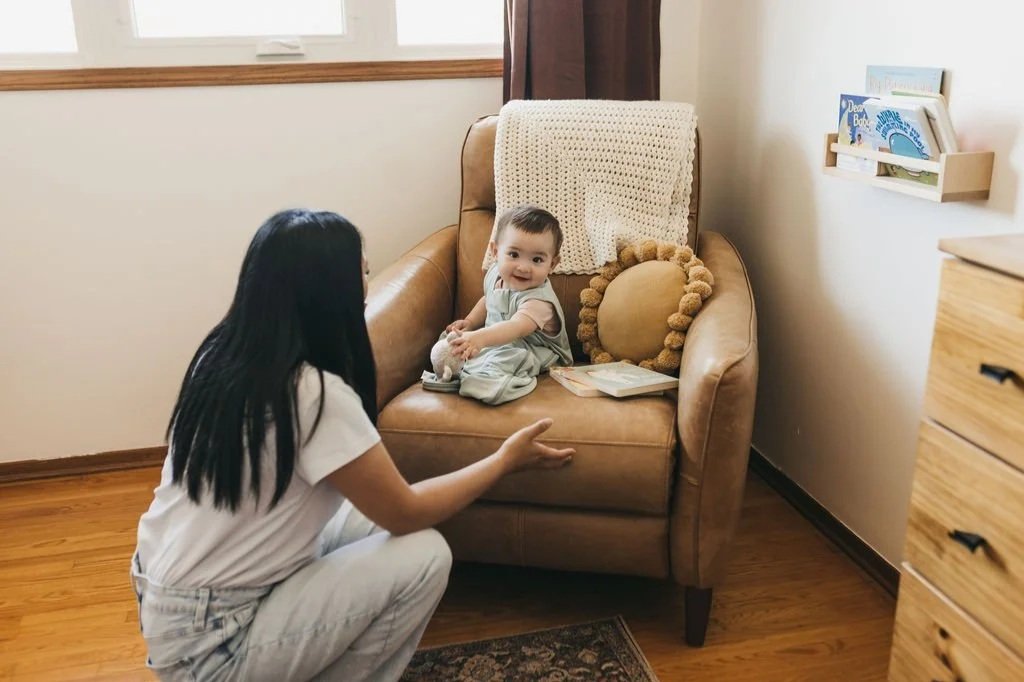
You don’t have to choose between comforting your baby and protecting the sleep skills you’ve worked on.
What Actually Helps During the 8–10 Month Sleep Regression?
Keep Things Predictable
When your baby’s world feels exciting and new, familiar routines can be reassuring.
Keep the same general nap and bedtime routines you were using before sleep changed. Those familiar steps continue signalling that sleep is coming, even when everything else feels a little different.
Practise New Skills During the Day
Give your baby lots of floor time to crawl, sit, pull up and practise getting back down.
You don’t need to tire them out. You’re simply giving their brain and body opportunities to work on those exciting new skills outside of the crib.
Check the Schedule—But Don’t Overhaul It
Development can disrupt sleep.
But so can a schedule that no longer fits.
If nap resistance, short naps, early mornings or long sleep onset have become a consistent pattern rather than an occasional rough day, it may be worth looking at whether the schedule needs a small adjustment.
Small is the key word.
Two rough nights don’t necessarily require a brand-new schedule.
Offer Reassurance in a Way That Feels Sustainable
Your baby may genuinely need more connection during this stage.
That’s okay.
Before introducing something completely new, though, ask yourself:
“Am I comfortable continuing this if this stage lasts a few weeks?”
If the answer is yes—great.
If the answer is no, look for another way to reassure your baby that still feels sustainable for your family.
You don’t have to choose between comforting your baby and protecting the sleep skills you’ve worked on.
How Long Does the 8–10 Month Sleep Regression Last?
There is no exact timeline.
For some babies, sleep disruption is brief. For others, it may come and go as new skills develop.
But if sleep has been consistently difficult for several weeks, don’t automatically assume you need to keep waiting for the regression to end.
Something else may be contributing.
Maybe the schedule needs adjusting.
Maybe your baby is completing a nap transition.
Maybe separation anxiety is playing a role.
Maybe something about how they’re falling asleep has changed.
At that point, it’s worth looking at the whole sleep picture instead of simply waiting it out.
When It Might Be More Than a Regression

If your baby’s sleep suddenly changed and you’re wondering, “Is this just a regression—or is something else going on?” you don’t have to figure it out alone.
If your baby suddenly begins waking very frequently overnight, don’t automatically assume it’s behavioural—or simply a regression.
First, consider whether they may be sick, hungry, uncomfortable, teething or experiencing something physical that could be affecting their sleep. If you have concerns about your baby’s health, feeding, growth or development, always speak with their healthcare provider.
Once those things have been considered, look at the rest of the sleep picture.
What changed?
Did naps change?
Did bedtime shift?
Are they learning a major new skill?
Are they suddenly protesting when you leave?
How are they falling asleep at the beginning of the night?
Because the waking itself is only one piece of information.
The waking is the symptom. Our job is to figure out what’s behind it.
A Final Reminder
There is no exact timeline. However, a regression rarely lasts longer than 2 weeks.
And sometimes what looks like a regression sticks around because something else has changed.
Maybe the baby needs longer wake windows.
Maybe they are ready to fully transition to two naps.
Maybe they have started needing the same help they received at bedtime every time they wake overnight…
This is when it becomes worth looking at the whole sleep picture instead of simply waiting for the regression to end.
We’d Love to Help
If your baby’s sleep suddenly changed and you’re wondering, “Is this just a regression—or is something else going on?” you don’t have to figure it out alone.
At Sleepy Ever After, we help families look beyond the symptom and troubleshoot the whole sleep picture.
Sometimes all it takes is one conversation to understand what changed, what clues your baby is giving you and which adjustments actually make sense for your child.
Our Sleep Strategy Call is designed for parents who don’t necessarily need weeks of support. They simply need experienced eyes on the situation, clarity on what may be happening and a plan that fits their baby and their family.
Because sometimes it’s a regression.
Sometimes it’s the schedule.
Sometimes it’s separation anxiety.
And sometimes it’s a few different things happening at once.
We’d be honoured to help you figure it out. 🤍
This article is for general educational purposes and is not medical advice. Speak with your child’s healthcare provider if you have concerns about illness, feeding, growth, development, breathing or sleep safety.